

Every load that leaves the floor raises the same two questions: what will lift it, and who will control it once it is in the air.
Industrial lifting covers many answers, and we look at them from the workstation, where our pneumatic manipulators work. That is the ground between muscle and heavy machinery, where loads are too heavy for the body and too delicate, frequent or precise for a hook.
This guide sets out the main equipment families, explains where manipulators make the difference and shows how we match each machine to the load.
On this page:
- What counts as lifting equipment
- What a well-designed lifting system changes
- The main families of industrial lifting equipment
- Between manual handling and heavy lifting: industrial manipulators
- RHS manipulators
- The gripping tool decides the lift
- Sectors we work in
- How to choose industrial lifting equipment
- What sets RHS apart
What counts as lifting equipment
The term reaches well beyond the machines that lift: any equipment used at work to lift or lower a load counts, together with the accessories that attach, fix or anchor it, from the hook to the vacuum pad. The load is just as broad: loose bulk materials, sacks and pallets, discrete parts, machinery and people.
On the shop floor the subject splits into two jobs that are easy to confuse. One is moving weight, carrying a heavy item from one point to another, where capacity and reach decide everything. The other is handling: picking a part up, turning it, presenting it to a machine or an assembly fixture, often on every cycle of the line. Cranes and forklifts were built for the first job. The second is where many plants still rely on muscle, and where the strain on operators accumulates shift after shift.
What a well-designed lifting system changes
The return shows on four fronts at once:
- Safety: when the machine carries the weight, the operator stops absorbing it, and the risk of injury from repeated lifting falls with it.
- Productivity: loads move with speed and precision, and materials flow from one stage to the next without waiting for two pairs of hands.
- Flexibility: a lifting system can be adapted to different environments and load types, which matters in plants that change products often.
- Cost: less downtime, fewer handling errors and fewer damaged parts.
The main families of industrial lifting equipment
Most plants combine several families of equipment. Overhead and jib cranes lift heavy loads hanging from a hook, forklifts carry palletised goods across the site, loader cranes on vehicles combine lifting with delivery, goods lifts move stock between floors and hydraulic gantries relocate heavy plant. They move weight from one place to another; none is designed for the second job, handling at the workstation. The table below sets every family side by side.
| Equipment family | Typical use | Movements | Control over the part | Main limit |
|---|---|---|---|---|
| Overhead or jib crane with hoist | Heavy loads across a bay or at a station | Vertical lift, travel | Low: the load hangs and swings | Tilting and placement need manual steadying |
| Forklift or telehandler | Pallets, stacking, internal transport | Lift and travel | Low | Needs aisles, a driver and a forkable load |
| Vehicle-mounted crane | Loading, delivery, site work | Lift and slew | Low to medium | Tied to the vehicle |
| Goods lift or lift table | Between floors, working height | Vertical only | Not applicable | Fixed path |
| Gantry, jacks, skates | Relocating heavy plant | Lift and slide | Medium, on a planned route | Project-based, specialist crew |
| Vacuum lifter or magnet | Gripping sacks, sheets, steel | Depends on the carrier | Depends on the carrier | Needs a suitable surface |
| Industrial manipulator | Repetitive handling at workstations | Lift, rotate, tilt, position | High | Works within a defined radius |
Between manual handling and heavy lifting: industrial manipulators
A whole band of loads falls through the gaps in that table. A 25 kg sack lifted dozens of times an hour, a car wheel offered to a hub, a ceramic basin turned through ninety degrees, a glass pane tilted from horizontal to vertical. Each of them needs control as much as lift, and this is the territory of the industrial manipulator.
A pneumatic manipulator balances the weight of the load with compressed air, so the operator guides it as if it weighed almost nothing. Unlike a hoist, it holds the part in a controlled attitude: it lifts, rotates, tilts and sets it down exactly where it is needed, then repeats the cycle as many times as the shift requires.
Two arm designs cover most applications. Rigid-arm models connect the load through a mechanical structure and keep control even when the centre of gravity sits away from the vertical, for instance when a part is gripped from the side or inserted into a machine. Rope models lift vertically and suit loads gripped from above.
RHS manipulators: three ranges for industrial handling
RHS designs and builds pneumatic manipulators and configures each one around the load, the gripping tool and the layout of the workstation.
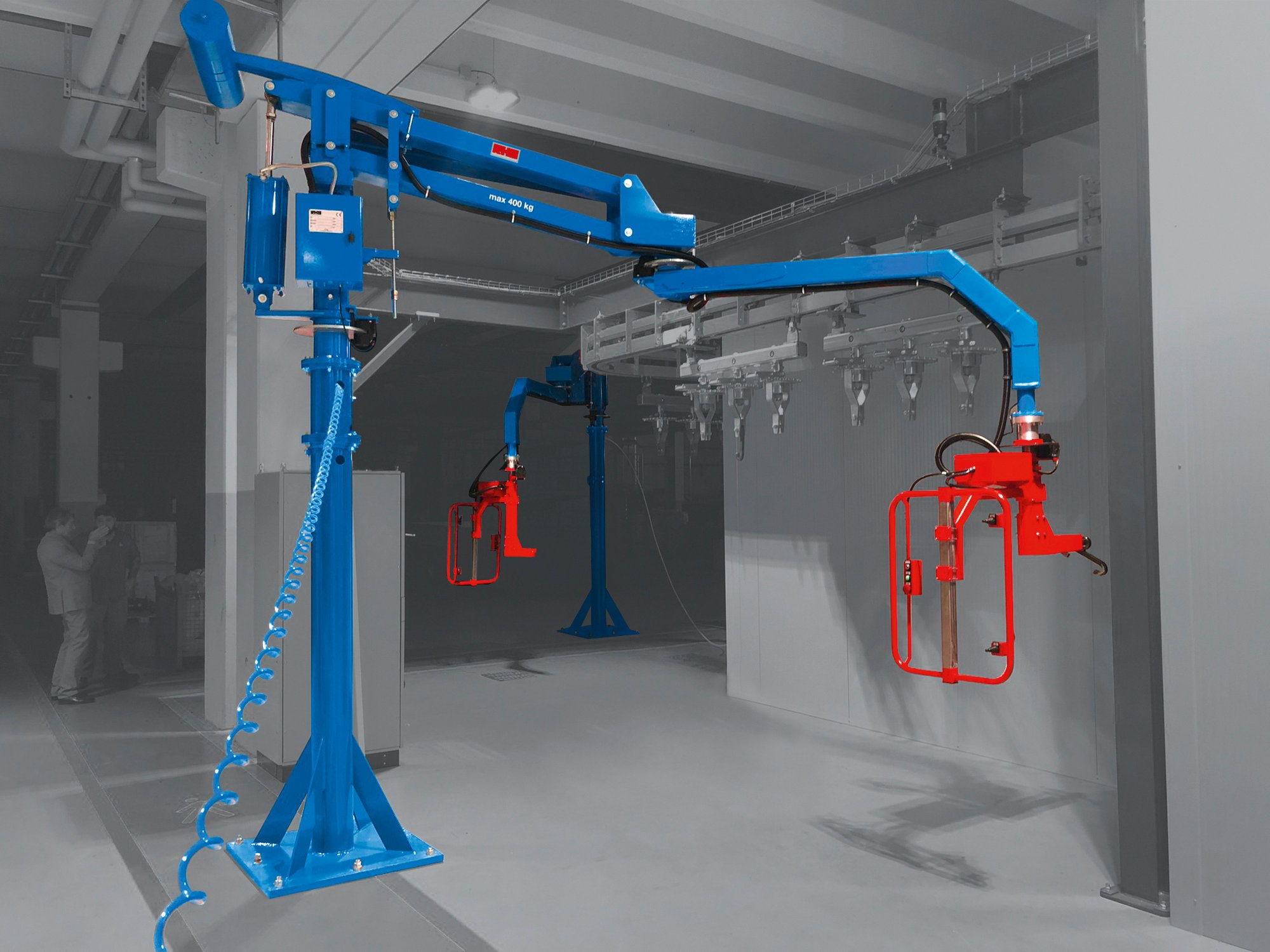
Column manipulators: fixed to the floor or mounted on a self-standing base, they handle components with an off-centre centre of gravity. The range covers loads from 20 to 800 kg, depending on capacity, maximum radius and the weight of the gripping tool.
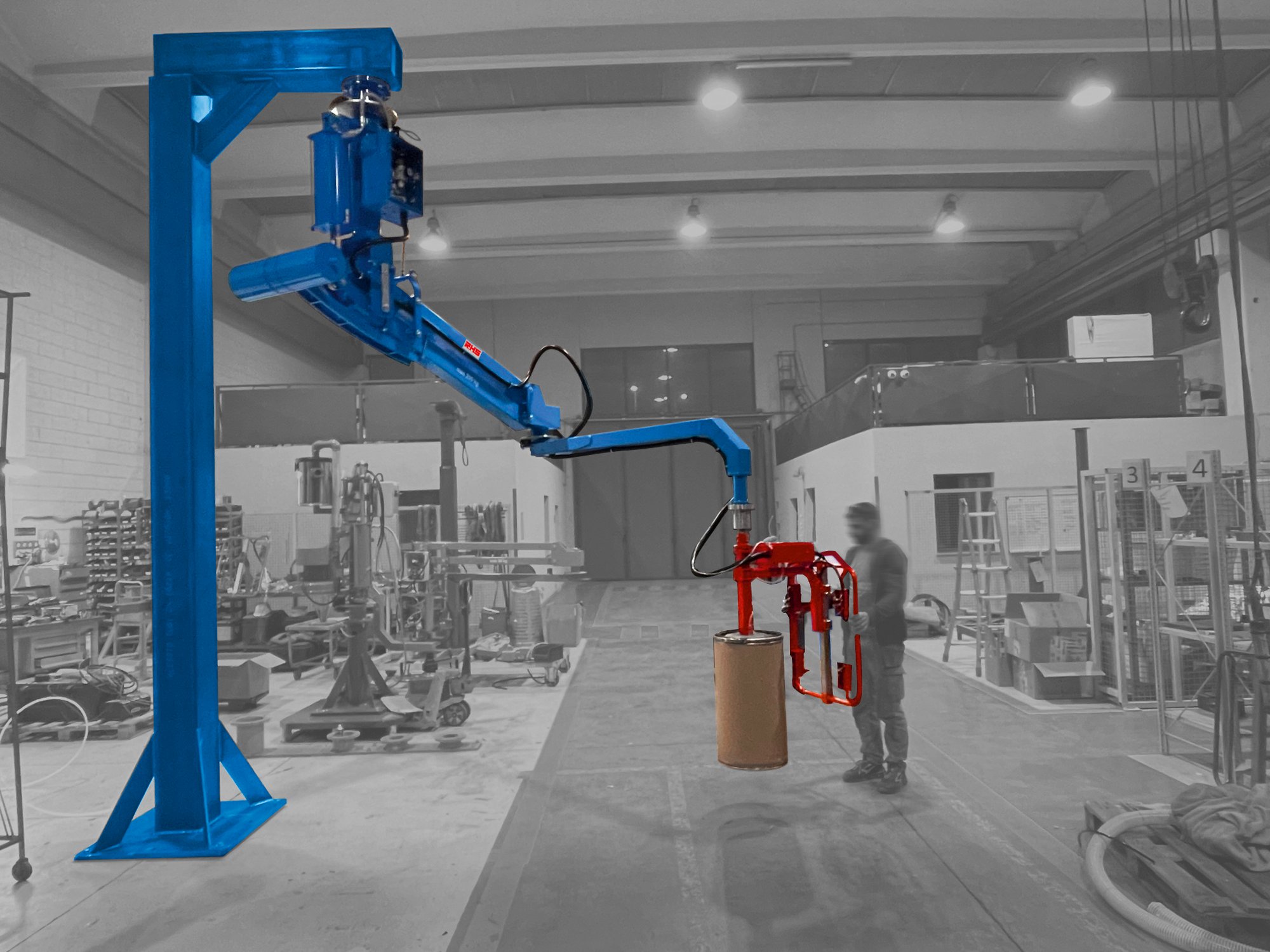
Fixed ceiling manipulators: hung from above, they leave the floor below completely free. The suspension can adapt to existing structures, subject to technical verification, or be designed as an independent structure
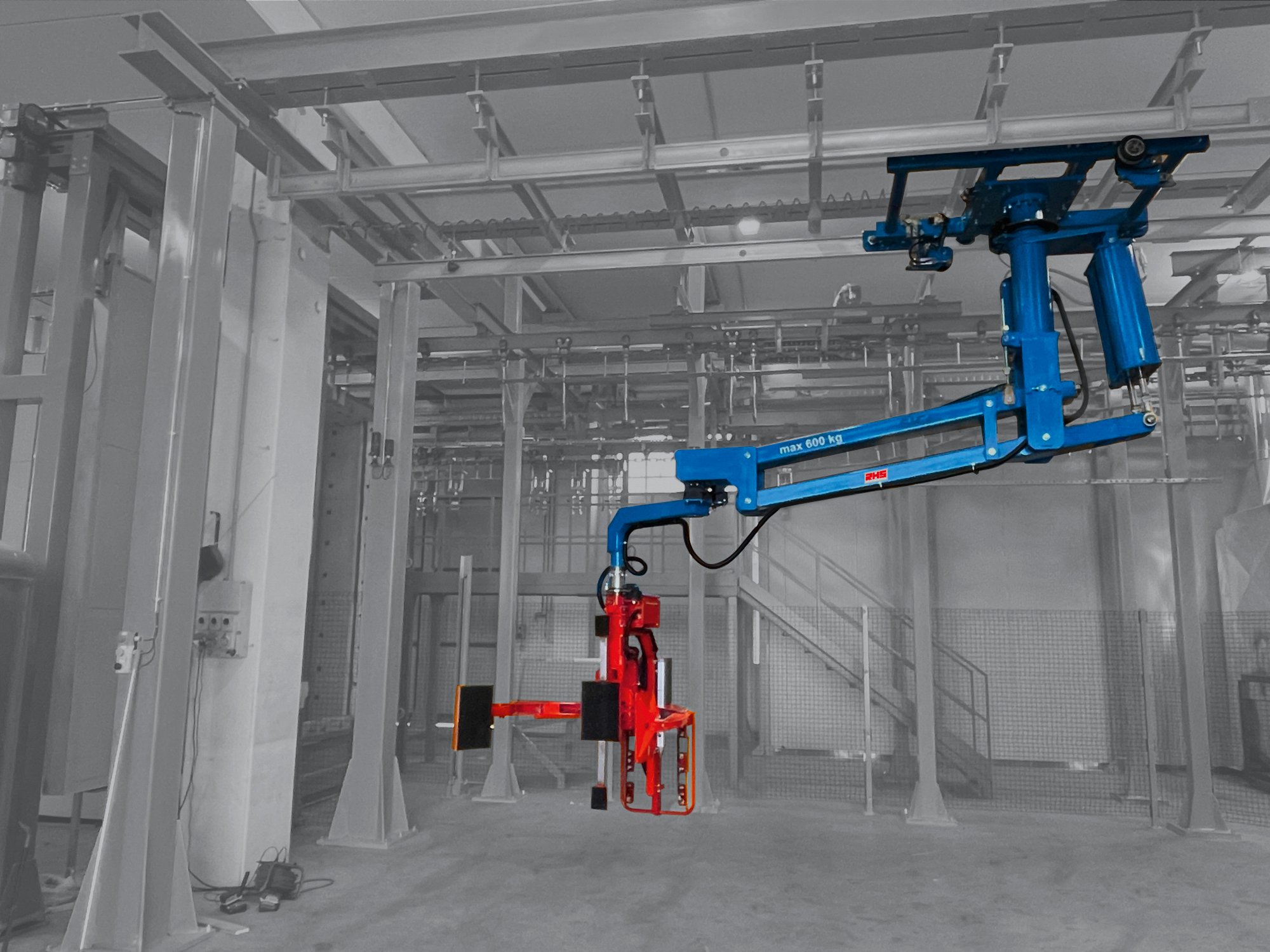
Sliding ceiling manipulators: suspended from rails, they travel across the work area by hand or with an operator-controlled pneumatic motor, so one machine can serve several stations.
The gripping tool decides the lift
A manipulator is only as capable as the tool at the end of its arm, which is why we design the gripping tool around the load. Matching the arm to the tool is what turns a lifting device into a handling station, and a photo or drawing of your part is enough for our team to start defining that match.
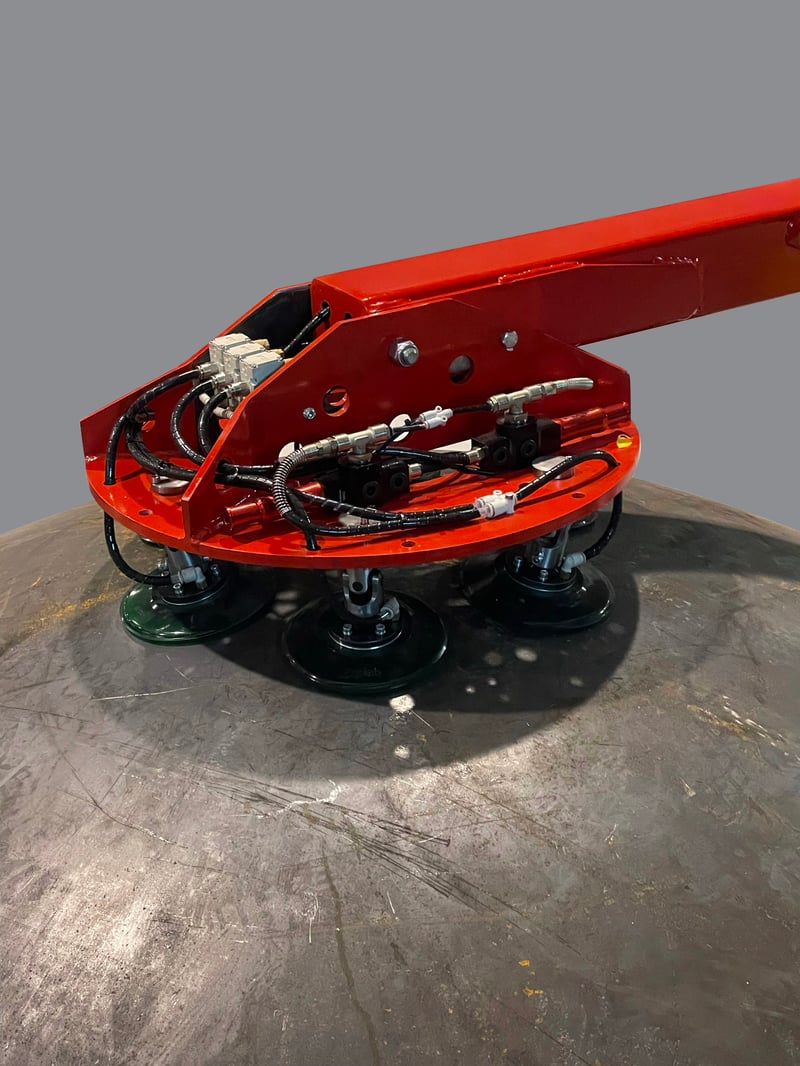
Suction cup
Vacuum grip for sheet metal, smooth panels and glass. On glass and panels a dual vacuum circuit keeps the hold even if one cup loses contact; electric pump and Venturi versions are available.
Discover more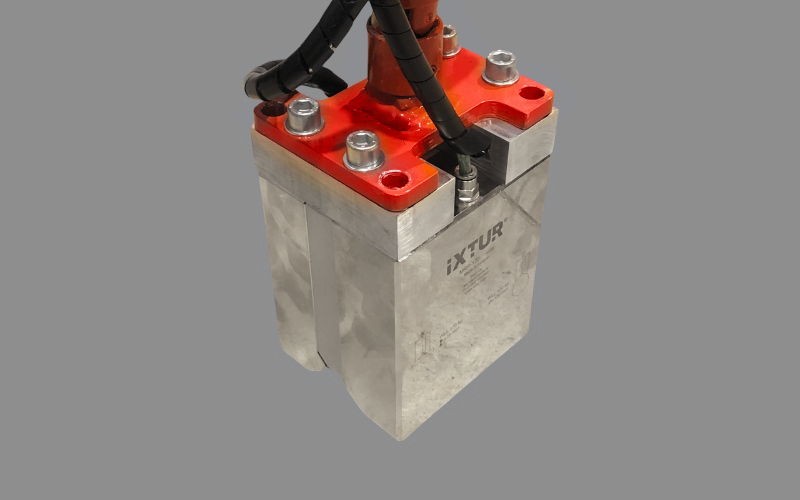
Magnet
Lifts mild steel sheets and parts, including sheets with holes or laser cuts that a suction cup could not seal. Not suitable for stainless steel.
Discover more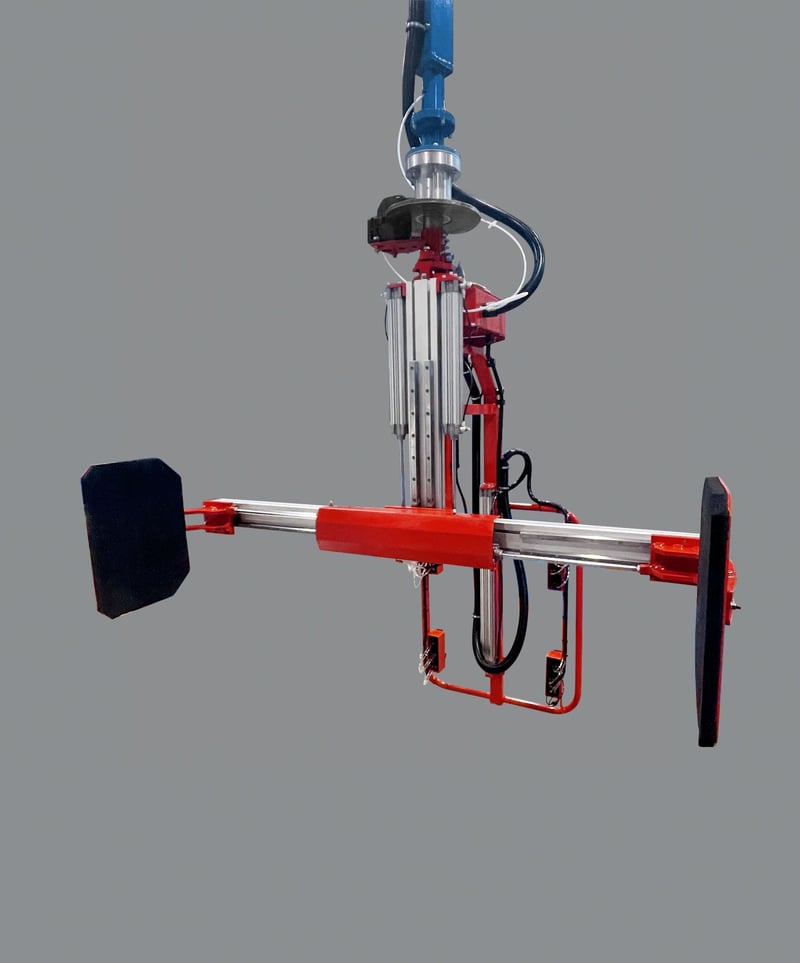
Pinch grippers
Pneumatic jaws that grasp the load firmly, the choice for porous panels where suction would not hold.
Discover more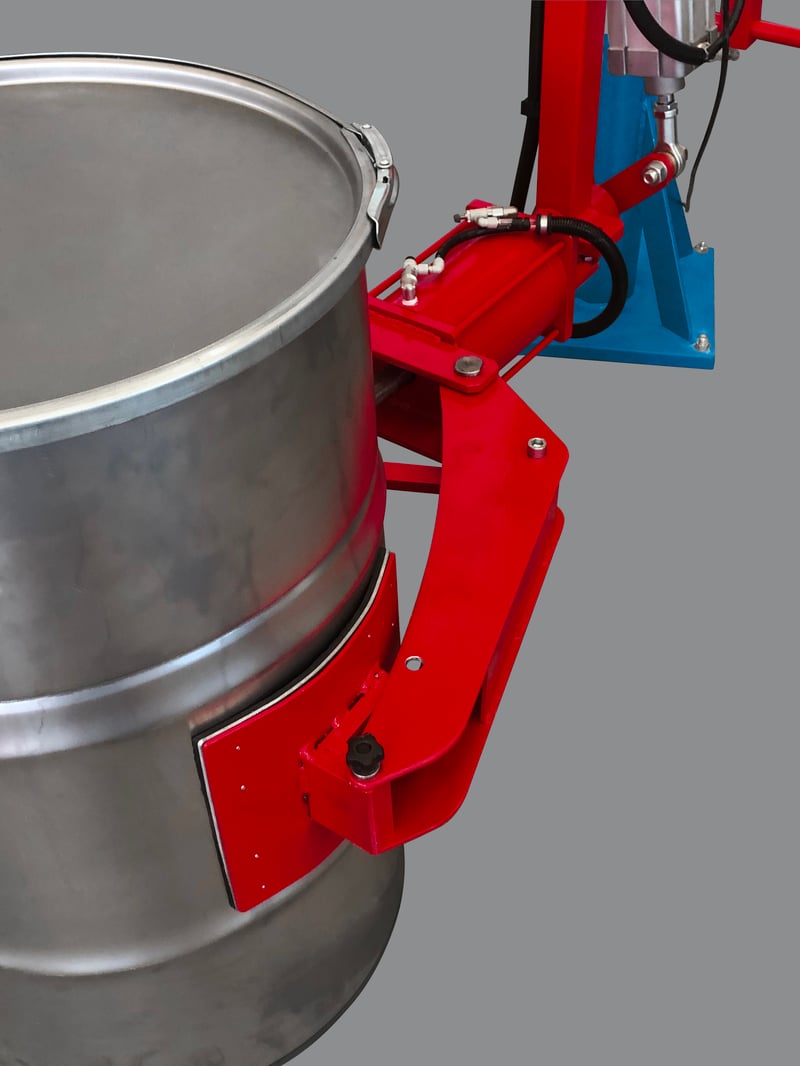
Mechanical clamp
Jaws shaped to the outer surface of the load hold it, suspend it and rotate it on additional axes.
Discover more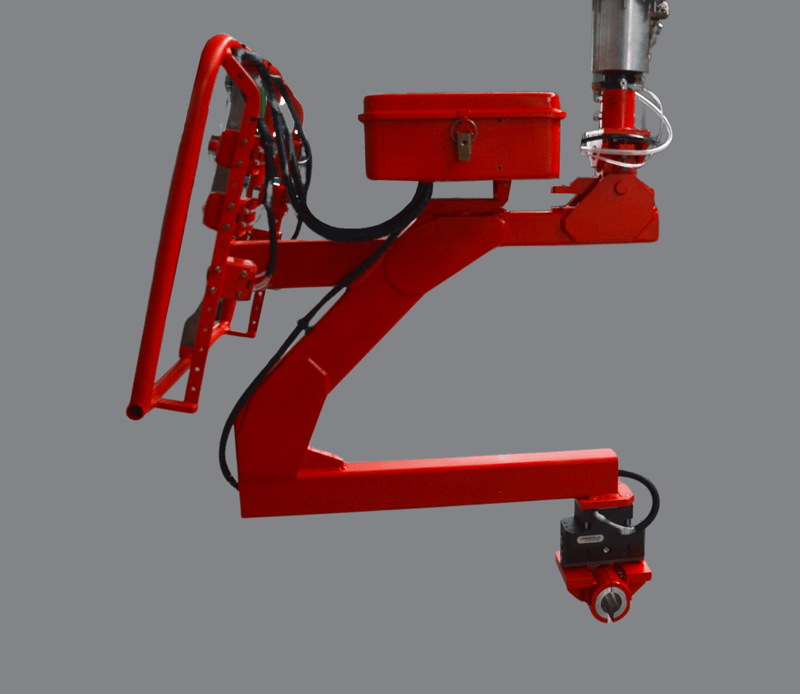
Shaped hook
Lifts kegs and containers by their handles and keeps them vertical, with no rotation during the lift.
Discover more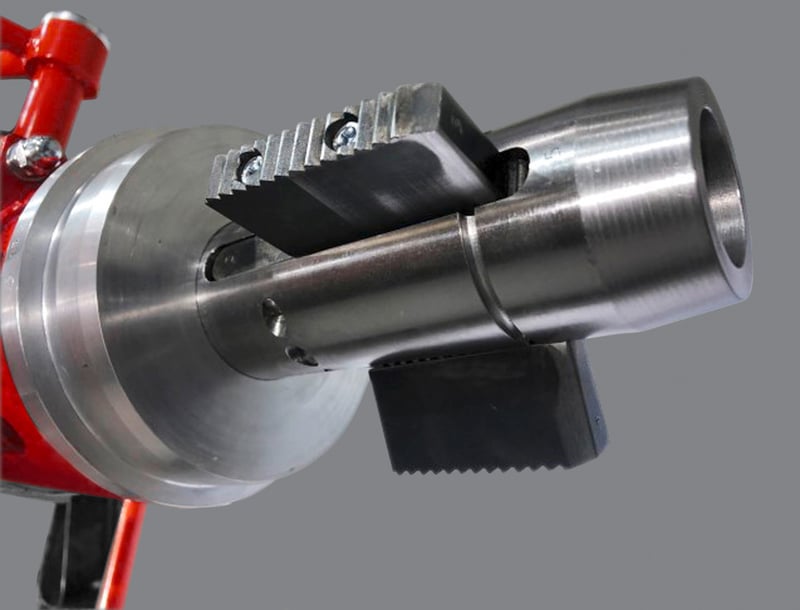
Mechanical chuck
Expanding chuck with 120° jaws, operated mechanically or pneumatically, for gripping coils from the core.
Discover moreShafts, gears and mechanical components handled with precision during machining and assembly.
Wheels and rims offered to the hub, with grips that help align the holes during assembly.
Drums, kegs and tanks lifted, tilted and positioned without manual effort.
Glass and panels handled with control, in production and on site.
Boxes and sacks picked and palletised at a steady pace, cycle after cycle.
Kegs, sacks and containers handled along food and beverage lines.
Manipulators configured for work in explosive atmospheres.
How to choose industrial lifting equipment
Before we propose a configuration, we ask six questions:
- Weight, tool included: A manipulator’s rated capacity depends on the load, the maximum working radius and the weight of the gripping tool together, so the figure that matters is the one at the radius you will actually use.
- Geometry and surface: They decide the grip. A hook needs a lifting point, suction a sealable face, jaws an outer profile to close on.
- Frequency: an occasional lift and a repetitive cycle call for different machines.
- Movement: vertical lifting alone, or rotation, tilting and precise insertion.
- Space: floor area, ceiling height and the strength of the building structure.
- Environment: any condition that changes how the machine must be built, such as hygiene rules or an explosive atmosphere.
What sets RHS apart
For more than thirty years we have designed handling systems around the people who use them, and that starting point shapes every machine we build:
- The operator at the centre. Movements follow the natural gestures of the person guiding the machine, improving posture and making the work more fluid.
- Total configurability. Capacity, load geometry, accessories, layout and workflow: no two installations need to look alike.
- Sustainability. Eco-compatible materials, optimised consumption and maintenance and a constant focus on operator wellbeing, in line with the principles of Industry 5.0.
- Multi-sector know-how. From metals to food processing, from glass to ceramics, we already know the constraints of most products and environments before a project starts.
Not sure which range fits your load?
Tell us what you lift, how often and where, and our technical team will propose the configuration,
gripping tool included.